
Search
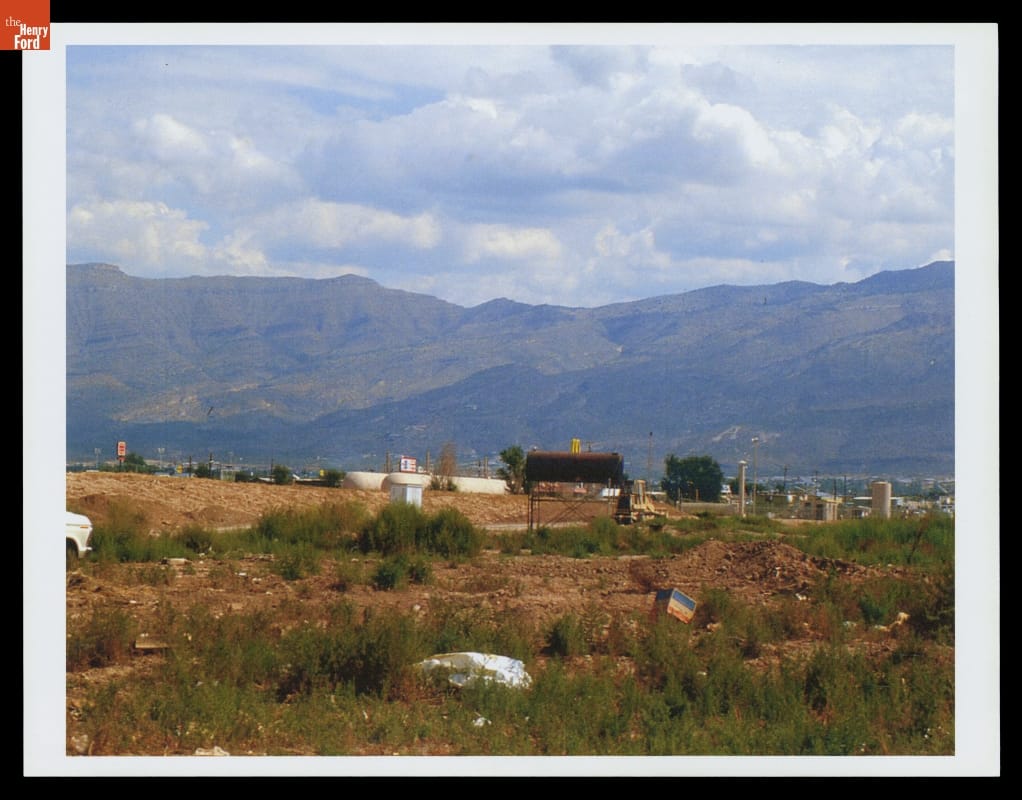
- Alamogordo, New Mexico Landfill in September 1983, Site of the Atari Video Game Burial - In 1983, rumors circulated: Atari was bankrupt, and was dumping truckloads of games into a New Mexico landfill. Victim to the "Video Game Crash," the company buried 700,000 cartridges in the desert. The story became an obscure pop culture legend -- until "The Atari Tomb" was unearthed in 2014. This image documents the original 1983 burial of material.
- September 01, 1983
- Collections - Artifact
Alamogordo, New Mexico Landfill in September 1983, Site of the Atari Video Game Burial
In 1983, rumors circulated: Atari was bankrupt, and was dumping truckloads of games into a New Mexico landfill. Victim to the "Video Game Crash," the company buried 700,000 cartridges in the desert. The story became an obscure pop culture legend -- until "The Atari Tomb" was unearthed in 2014. This image documents the original 1983 burial of material.
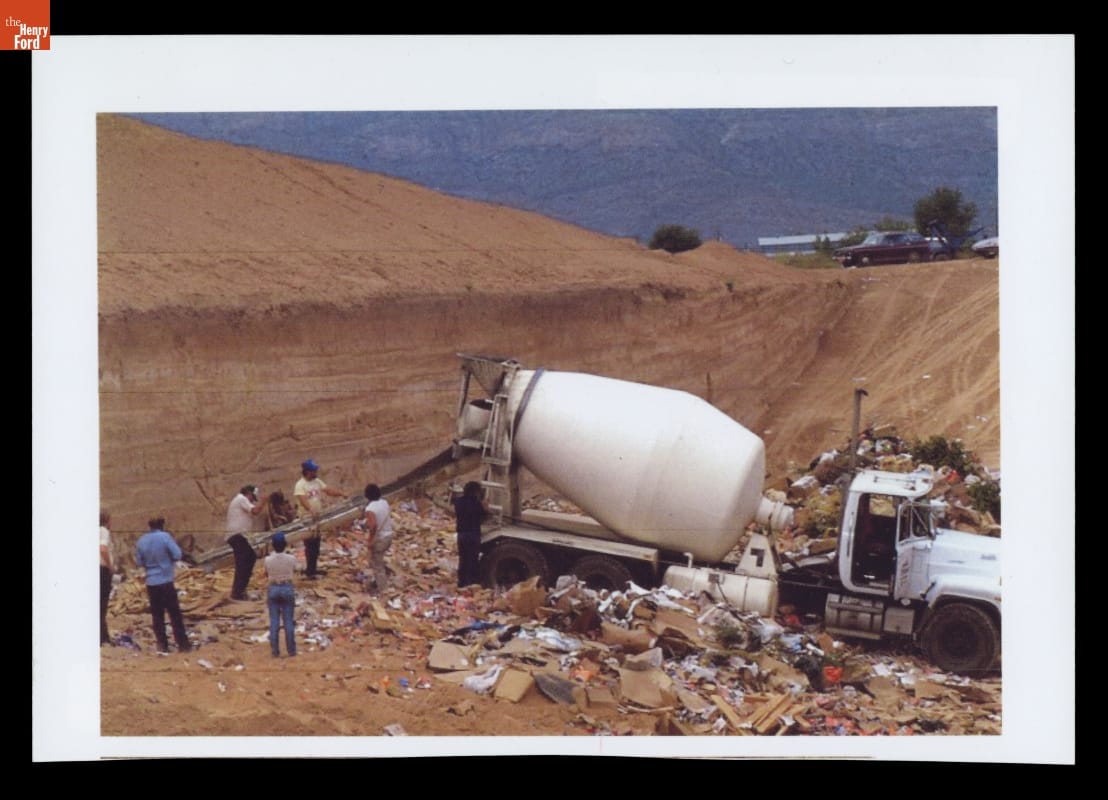
- Cementing over Refuse at the Atari Video Game Burial in September 1983, Alamogordo, New Mexico Landfill - In 1983, rumors circulated: Atari was bankrupt, and was dumping truckloads of games into a New Mexico landfill. Victim to the "Video Game Crash," the company buried 700,000 cartridges in the desert. The story became an obscure pop culture legend -- until "The Atari Tomb" was unearthed in 2014. This image documents the original 1983 burial of material.
- September 01, 1983
- Collections - Artifact
Cementing over Refuse at the Atari Video Game Burial in September 1983, Alamogordo, New Mexico Landfill
In 1983, rumors circulated: Atari was bankrupt, and was dumping truckloads of games into a New Mexico landfill. Victim to the "Video Game Crash," the company buried 700,000 cartridges in the desert. The story became an obscure pop culture legend -- until "The Atari Tomb" was unearthed in 2014. This image documents the original 1983 burial of material.
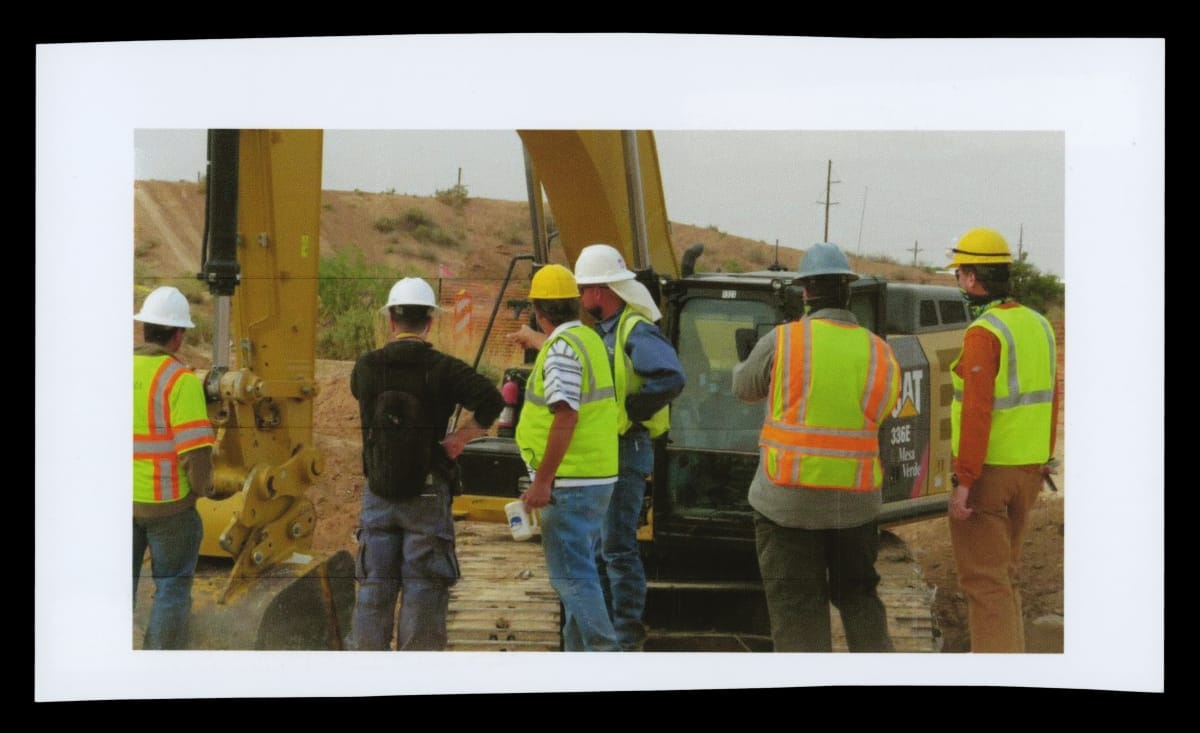
- Excavation Crew in April 2014 at the Alamogordo, New Mexico Landfill, Site of the 1983 Atari Video Game Burial - In 1983, rumors circulated: Atari was bankrupt, and was dumping truckloads of games into a New Mexico landfill. Victim to the "Video Game Crash," the company buried 700,000 cartridges in the desert. The story became an obscure pop culture legend -- until "The Atari Tomb" was unearthed in 2014. These images document the world's first video game excavation.
- April 26, 2014
- Collections - Artifact
Excavation Crew in April 2014 at the Alamogordo, New Mexico Landfill, Site of the 1983 Atari Video Game Burial
In 1983, rumors circulated: Atari was bankrupt, and was dumping truckloads of games into a New Mexico landfill. Victim to the "Video Game Crash," the company buried 700,000 cartridges in the desert. The story became an obscure pop culture legend -- until "The Atari Tomb" was unearthed in 2014. These images document the world's first video game excavation.
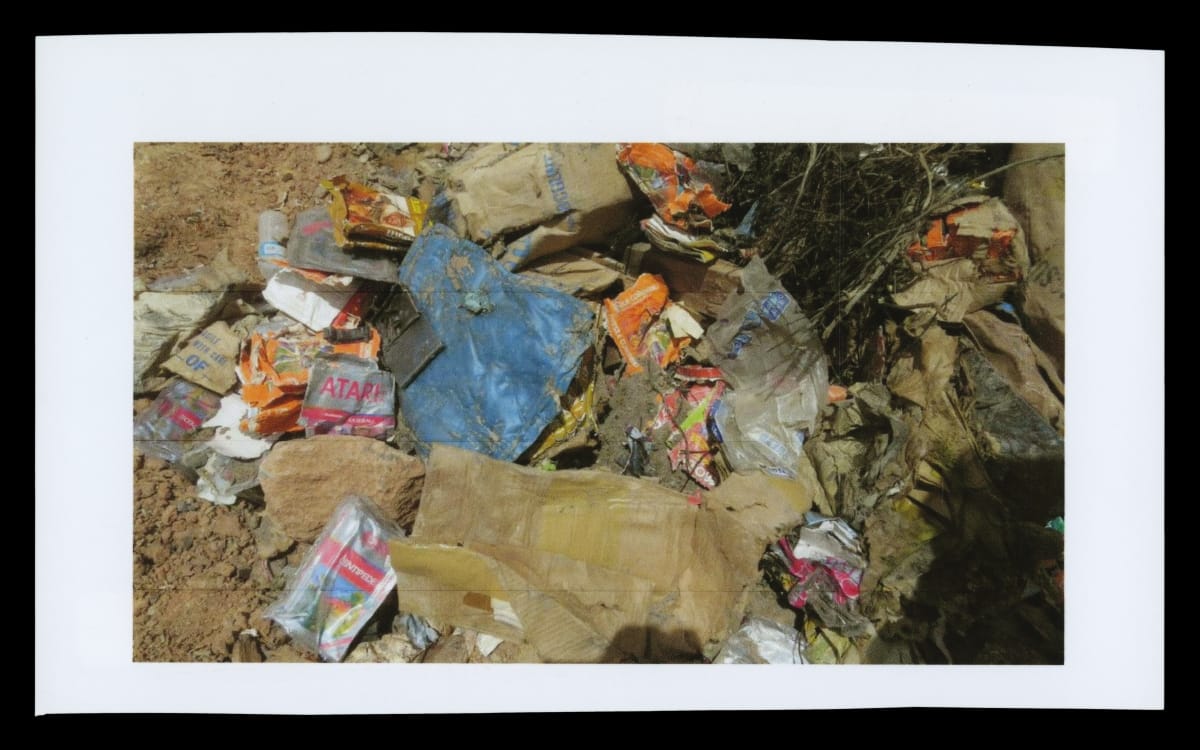
- Atari Products Excavated April 2014 from the Alamogordo, New Mexico Landfill, Site of the 1983 Atari Video Game Burial - In 1983, rumors circulated: Atari was bankrupt, and was dumping truckloads of games into a New Mexico landfill. Victim to the "Video Game Crash," the company buried 700,000 cartridges in the desert. The story became an obscure pop culture legend -- until "The Atari Tomb" was unearthed in 2014. These images document the world's first video game excavation.
- April 26, 2014
- Collections - Artifact
Atari Products Excavated April 2014 from the Alamogordo, New Mexico Landfill, Site of the 1983 Atari Video Game Burial
In 1983, rumors circulated: Atari was bankrupt, and was dumping truckloads of games into a New Mexico landfill. Victim to the "Video Game Crash," the company buried 700,000 cartridges in the desert. The story became an obscure pop culture legend -- until "The Atari Tomb" was unearthed in 2014. These images document the world's first video game excavation.
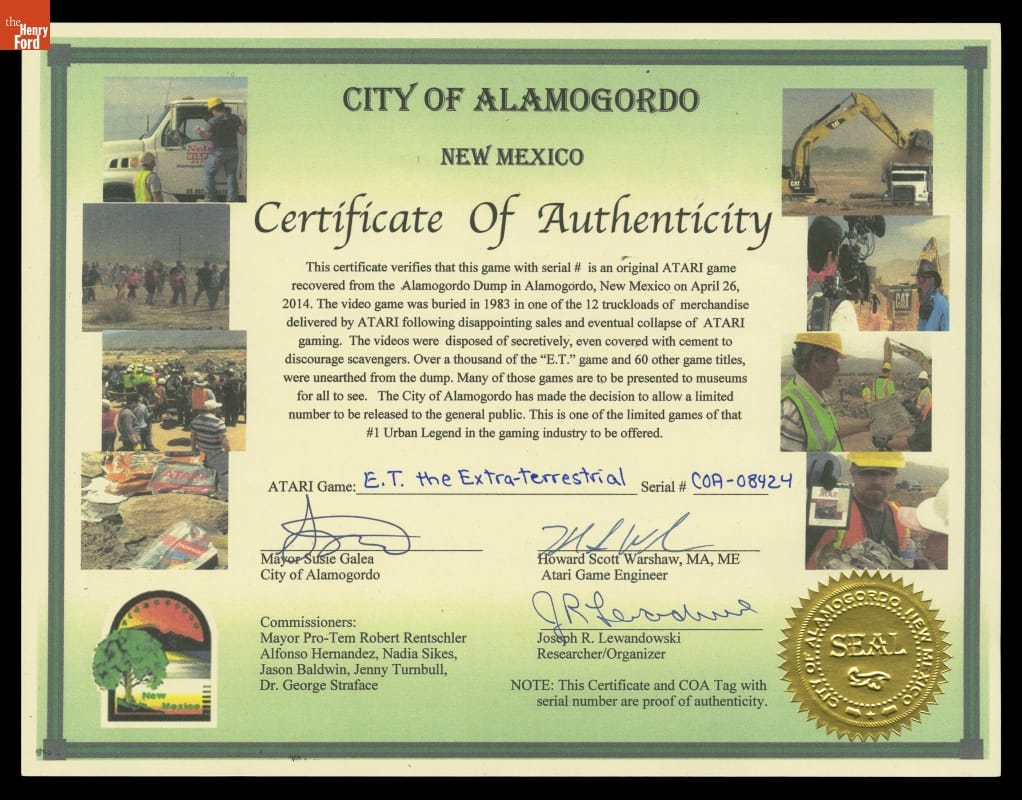
- Certificate of Authenticity for Video Game Recovered in 2014 from the 1983 Atari Video Game Burial Site - In 1983, rumors circulated: Atari was bankrupt, and was dumping truckloads of games into a New Mexico landfill. Victim to the "Video Game Crash," the company buried 700,000 cartridges in the desert. The story became an obscure pop culture legend -- until "The Atari Tomb" was unearthed in 2014. This document captures the history of the world's first video game excavation.
- April 26, 2014
- Collections - Artifact
Certificate of Authenticity for Video Game Recovered in 2014 from the 1983 Atari Video Game Burial Site
In 1983, rumors circulated: Atari was bankrupt, and was dumping truckloads of games into a New Mexico landfill. Victim to the "Video Game Crash," the company buried 700,000 cartridges in the desert. The story became an obscure pop culture legend -- until "The Atari Tomb" was unearthed in 2014. This document captures the history of the world's first video game excavation.
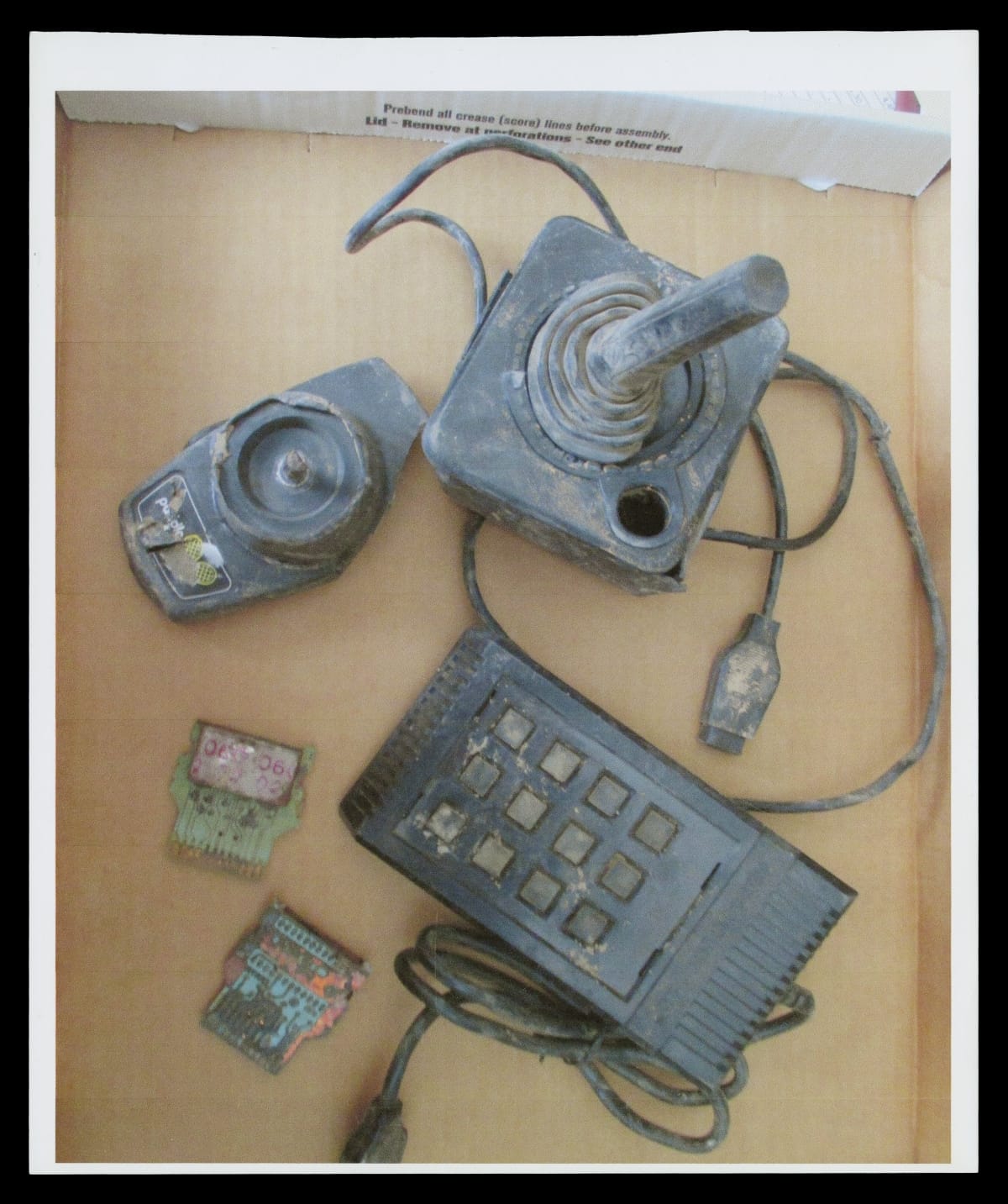
- Artifacts Recovered from an Alamogordo, New Mexico Landfill, April 2014, Site of the 1983 Atari Video Game Burial - In 1983, rumors circulated: Atari was bankrupt, and was dumping truckloads of games into a New Mexico landfill. Victim to the "Video Game Crash," the company buried 700,000 cartridges in the desert. The story became an obscure pop culture legend -- until "The Atari Tomb" was unearthed in 2014. These images document the world's first video game excavation.
- April 26, 2014
- Collections - Artifact
Artifacts Recovered from an Alamogordo, New Mexico Landfill, April 2014, Site of the 1983 Atari Video Game Burial
In 1983, rumors circulated: Atari was bankrupt, and was dumping truckloads of games into a New Mexico landfill. Victim to the "Video Game Crash," the company buried 700,000 cartridges in the desert. The story became an obscure pop culture legend -- until "The Atari Tomb" was unearthed in 2014. These images document the world's first video game excavation.
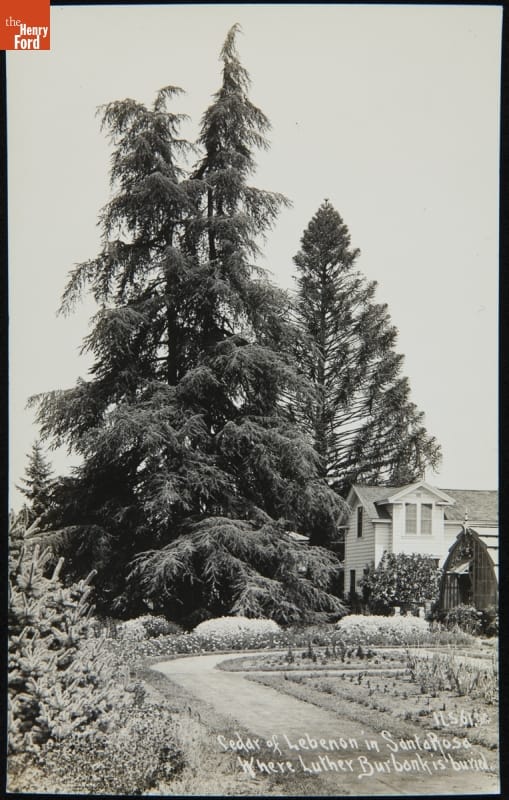
- Cedar of Lebanon in Santa Rosa, California Where Luther Burbank is Buried, 1928-1940 - Luther Burbank (1849-1926), an American horticulturalist and author, gained a reputation for selective breeding that yielded more than 800 new fruits, vegetables, flowers, and other plants. In 1875, Burbank followed family from Massachusetts to Santa Rosa, California, attracted by a longer growing season. By 1881, Burbank's modest success with raising and selling plants allowed him to purchase the home depicted here.
- 1928-1940
- Collections - Artifact
Cedar of Lebanon in Santa Rosa, California Where Luther Burbank is Buried, 1928-1940
Luther Burbank (1849-1926), an American horticulturalist and author, gained a reputation for selective breeding that yielded more than 800 new fruits, vegetables, flowers, and other plants. In 1875, Burbank followed family from Massachusetts to Santa Rosa, California, attracted by a longer growing season. By 1881, Burbank's modest success with raising and selling plants allowed him to purchase the home depicted here.
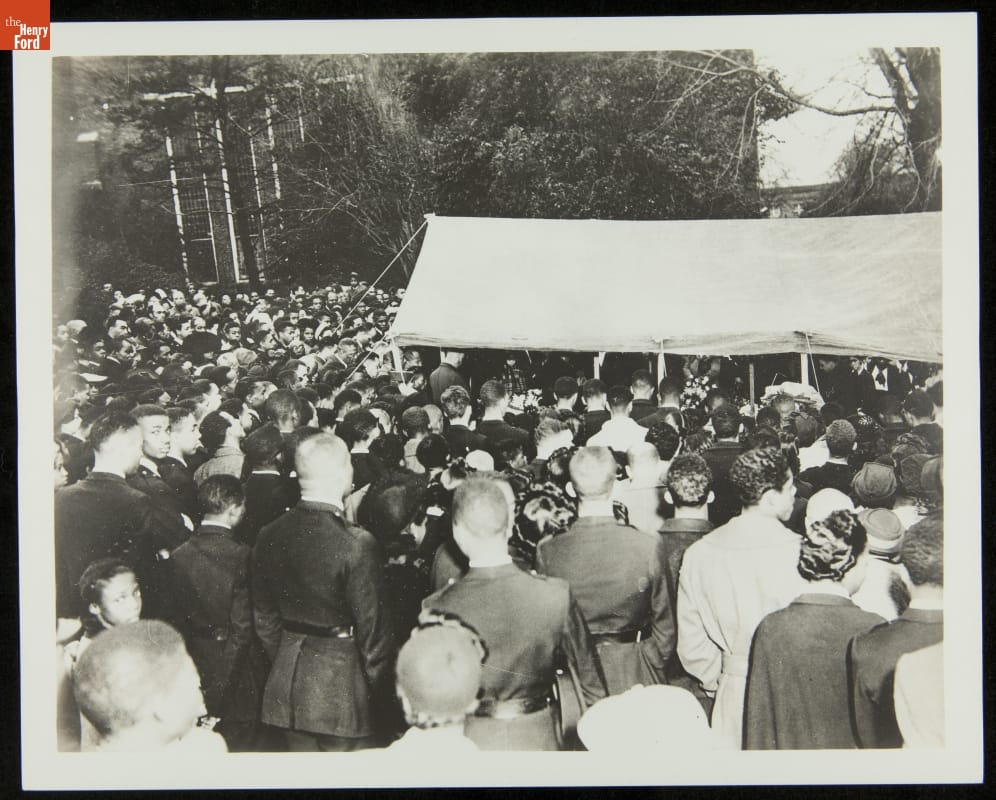
- Burial Service of George Washington Carver, Tuskegee Institute, 1943 - George Washington Carver's funeral services were held at the chapel of the Tuskegee Institute in Tuskegee, Alabama, where the celebrated agricultural scientist had taught since 1896. Carver's death in 1943 provoked an outpouring of tributes to his remarkable life and work.
- January 08, 1943
- Collections - Artifact
Burial Service of George Washington Carver, Tuskegee Institute, 1943
George Washington Carver's funeral services were held at the chapel of the Tuskegee Institute in Tuskegee, Alabama, where the celebrated agricultural scientist had taught since 1896. Carver's death in 1943 provoked an outpouring of tributes to his remarkable life and work.
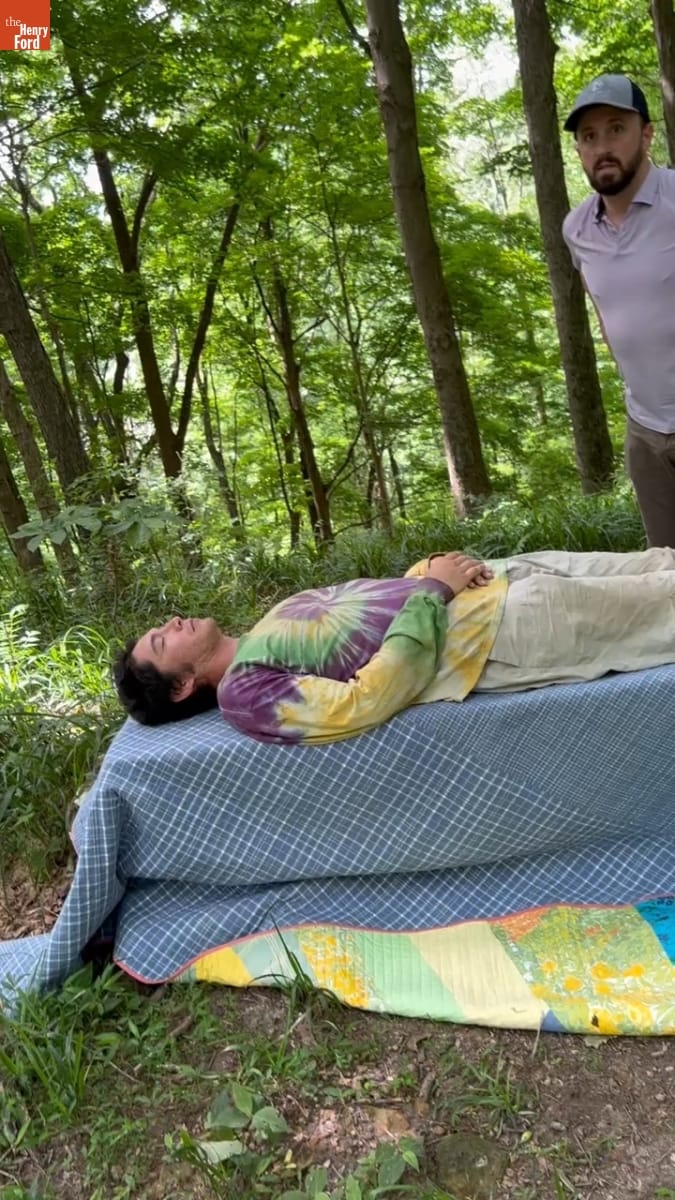
- Demonstration of "Cathedral" Burial Quilt Made by Zak Foster, 2022 - Zak Foster, a textile artist who identifies as gay, creates burial quilts. His quilts -- made from all-natural fibers -- are designed to be enjoyed in life, then wrapped around the deceased to protect the body when placed directly into the earth. Foster produced photos and video showing how to wrap a body in one of his quilts for burial.
- 2022
- Collections - Artifact
Demonstration of "Cathedral" Burial Quilt Made by Zak Foster, 2022
Zak Foster, a textile artist who identifies as gay, creates burial quilts. His quilts -- made from all-natural fibers -- are designed to be enjoyed in life, then wrapped around the deceased to protect the body when placed directly into the earth. Foster produced photos and video showing how to wrap a body in one of his quilts for burial.
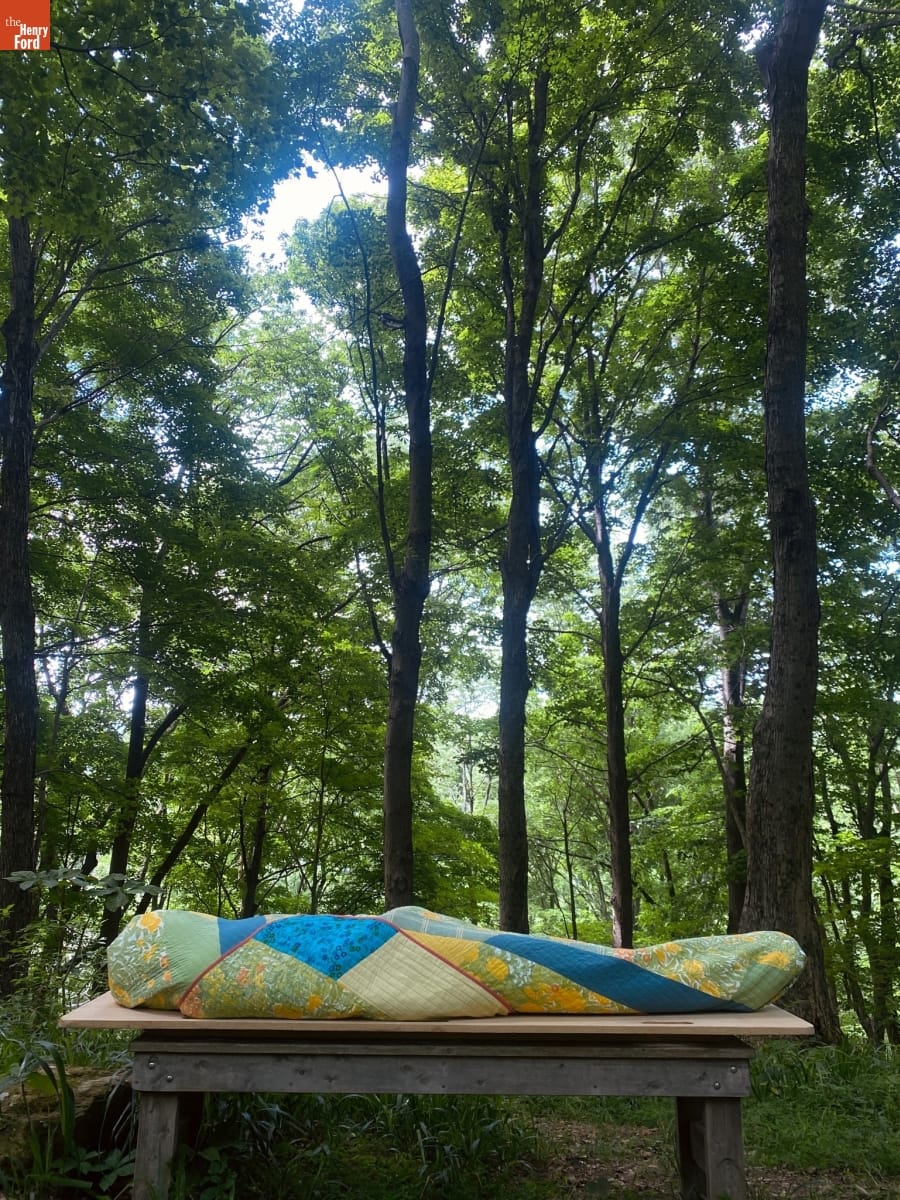
- Demonstration of "Cathedral" Burial Quilt Made by Zak Foster, 2022 - Zak Foster, a textile artist who identifies as gay, creates burial quilts. His quilts -- made from all-natural fibers -- are designed to be enjoyed in life, then wrapped around the deceased to protect the body when placed directly into the earth. Foster produced photos and video showing how to wrap a body in one of his quilts for burial.
- 2022
- Collections - Artifact
Demonstration of "Cathedral" Burial Quilt Made by Zak Foster, 2022
Zak Foster, a textile artist who identifies as gay, creates burial quilts. His quilts -- made from all-natural fibers -- are designed to be enjoyed in life, then wrapped around the deceased to protect the body when placed directly into the earth. Foster produced photos and video showing how to wrap a body in one of his quilts for burial.